MEDIA (CAN) MAKE CHANGE: ImmaTeen Fans Speak Out Against Bullying
I've been thinking, since so many teens are on the Internet, why don't we start there?
I'm pretty active on the Internet. I'm especially active on my facebook page, ImmaTeen. All my admins on ImmaTeen have been actively using this page for fun, games, and anti-bullying awareness.

So today, I asked my fans on ImmaTeen if they can post some of their bullying stories, and they agreed to! Here's one story below.
"I was getting bullied in 7th grade because I liked a boy who a girl liked. She never would leave me alone. Her friends would start and they would message me saying I'm a slut I'm fat and ugly no ones wants to be with or around me. After awhile I started to believe them so I started drugs, then burning my self. One night I took a full [bottle] of sleeping pills the ambulance had to revive me. I'm now not doing drugs or bullied and I'm not harming myself things get better. Trust me"
- Katlynn
It makes me sad to think that this happens to kids and teens all around the world. Just hearing some of these stories give me chills down my spine. It's not something that needs to happen to people. Most reason kids bully each other, especially over the Internet, is because they were hurt themselves. They had gotten bullied or abused at home. They can't take away the pain and suffering so they bully someone.
I made this video a while ago and posted it for all the ImmaTeen fans to see, Its called "Stop The Tears and End The Fears". It's a video featuring people who had been victimized by bullies. Some of these kids and teens have been so close to committing suicide because of these people. The main way I have chosen to help these teens is by using the Internet.
This is why I want to start a program at my school to stop cyber, verbal, and physical bullying. Today is the day you can help someone who's been bullied. This is your time to make a change.
Media Speaks! So use it!
Also, check out this page: Stop The Tears and End The Fear! Its a great page and they're very helpful on there!
-Zoë, Youth Correspondant/contributing writer
Have you been bullied? Share your story with Zoë at Media Speak! or on ImmaTeen Facebook page.
Image source
Meet Andy Kopsa The Woman Behind NOLA to NYC Tumblr

Andy Kopsa is a freelance journalist who currently resides in New York City. She (yes she) is the creator of the much-talked about Tumblr From NOLA to NYC, which appeared the week after hurricane Sandy. When I came across Kopsa’s Tumblr page via Twitter I immediately wanted to reach out and get to know more about her work. Like Kopsa, I too have a connection to both NOLA and NYC. Though I never lived in NOLA, I was a volunteer during hurricane Katrina while living in Houston, Texas. Over the last several years I’ve collaborated with Katrina survivors on media and research projects. Hurricane Katrina undoubtedly changed my life and fueled my ambitions to be a better storyteller and advocate.
Having recently experienced hurricane Sandy as a resident of New York City and as an Occupy Sandy volunteer, I’ve found myself reflecting on the similarities and differences between hurricanes Katrina and Sandy. I’m beginning to think hurricanes follow me, or perhaps I follow them.
Nonetheless, I’m fascinated by the power of the human spirit to act as a healing mechanism after (un)natural disasters. I’m also incredibly drawn to the ways in which ordinary people, those directly and indirectly affected by natural disaster use social media to create what I call nurture-networks; that is, online/offline support networks cultivated in response to crisis.
I recently had the opportunity to interview Kopsa about NOLA to NYC Tumblr. In addition to discussing her project, she also told me about how disappointed she is with media outlets using images from NOLA to NYC Tumblr without permission. She also talked about being frustrated by various media outlets referring to her as a "he". Kopsa also shares with me how she feels about NOLA seven years after Katrina. In the passages below, you'll learn more about Kopsa, the woman behind the NOLA to NYC Tumblr, and about her plans to continue to support the two cities she calls home; New Orleans and New York City.
TLC: It seems like we share similar experiences having both been affected by hurricane Katrina and hurricane Sandy. What interests you most to the stories of those affected by the hurricanes?
AK: I don’t think it is hurricanes per se. For me, this project was about two of the places I have called home: New Orleans and New York City. Having a deep connection with New Orleans, and with New York it only made sense . I had to do something. I am an investigative reporter who went to photo school so these things just happen with that kind of history!
TLC: You wrote in the “About” section of NOLA to NYC that during Sandy you were in NOLA, and while thinking about your family back in NYC, you thought to create NOLA to NYC via Tumblr. What made you think to use social media like Tumblr as an outlet and as means to connect two geographically separate communities?
AK: Truthfully, because it was easy. I had a Tumblr account for another project in the works featuring women journalists from rural america who moved to the “big city” and it was simple to add another page. I know, not a very sexy answer but the truth. On the road, it is hard at times to get up and run on a blog, new website, etc. Pitching stories on the fly is difficult for me. Tumblr afforded some serious ease since I was consumed with shooting, reporting, and watching The Weather Channel.
TLC: At what point did you realize NOLA to NYC was beginning to pick up viral steam on the Internet?
AK: A friend tweeted a Salon story featuring the project. But, I do publish in a wide variety of places and know writers at Salon so I wasn’t completely surprised. It didn’t seem like a big deal initially. It is when media requests started pouring in from places like NBC Nightly News and other outlets that I was taken aback.
TLC: What insights, if any, have you gained from the NOLA to NYC project? What have you learned that perhaps you weren’t expecting to learn as a result of creating NOLA to NYC?
AK: That the media, of which I am a part, is an incredibly powerful tool. For good or for ill, you have control how you use that tool. In retrospect, I may not have used Tumblr simply because everyone and their monkey’s uncle picked up photos and used them without permission. This started as a deeply personal project, me photographing Katrina survivors, friends. I listened to their stories and went through some personal anguish reporting on and photographing the appalling lack of progress in the seven years since Katrina. NOLA was my home for a handful of years and I love that place. So when people in the media, I am talking small time blogs to national television networks, started using some of the photos without even an email, well, I was none too pleased.
As a reporter who would never dream of using someones images, writings, anything, without permission - or at least a hat tip or link - it disgusts me. People were writing things about me that weren’t true. Like I am a he , which I am not. And, one publication printed that I was a native of New Orleans and a Katrina survivor. Both not true. Nowhere in my personal history will you ever find those kinds of claims. A 5 second google search would have told you I am an Iowa native and a lady. Come to find out the “reporter” picked up my twitter feed and read her own fantasy into my tweets about NOLA to NYC. I asked that next time she write about a person, at the very least, she give a ring-a-ling or drop an email. Off soapbox.
I should mention that I didn’t learn that New Orleanians are incredibly passionate, resilient and down to earth people, that Katrina survivors are bad ass, love their city and will give back until it hurts. I didn’t learn that from this project only because I already knew that.
TLC: Some may argue that NOLA to NYC is just another Internet meme that may lose people’s interest when the next meme comes along. Do you think NOLA to NYC is ‘just another Internet meme’? How do you keep the conversations going even after people lose interest in hurricane narratives?
AK: People are already losing interest. But, that doesn’t really matter. I wasn’t launching the site to springboard a career. I will go about my business. I won a grant from USC Annenberg (Knight Grant on Reporting in Religion and Public Life) to investigate religion and sex education in Mississippi so I need to get back to that. The only conversation I want to continue is the one about seven years later: NOLA is still hobbled. The lower ninth ward is still decimated. The lakefront still bears the scars of Katrina. Half the population is gone. Graft is still a king of New Orleans. We need to look at New Orleans as prologue to the long road back we have here in the wake of Sandy. There are tons of lessons to be learned from how Katrina was handled. We need to be mindful that although the administrations have changed, many of the mechanisms for disaster recovery have not. Private contractors promising victims a brighter tomorrow when what they really are up to is testing out new building materials or upcharging FEMA and the feds. I know, sounds bleak, but this is one of those teachable moments.
TLC: Do you have any plans to expand the outreach of NOLA to NYC offline or to other online spaces? If so, are there ways that other people can continue to support your efforts?
AK: I just made the decision to start selling prints of the original 12 portraits I shot. I will be donating a portion of the profits, if any, to the Ali Forney Center in New York City. A drop in shelter for LGBTQ teens. The center was destroyed in the wake of Sandy. A lot of my reporting in the past dealt with issues of LGBTQ rights and I've donated clothing and other items to the center before. It seems a natural and right fit.
I am also going to Mastic Beach this weekend to take NOLA to NYC care packages to the people hit hard in that area of Long Island. This was brought to my attention by the head of a pop-up charity group called New Orleans Gives Back. The group will be bringing a truck full of useful cleanup and support supplies to Mastic this weekend. The founder of the group asked if I wanted to be a part of it. Of course I did, so I am making little prints and bringing some of the words of love and wisdom from the NOLA to New York project to Mastic. It is a small gesture, but hopefully hearing from people who have been through it will bring a brief moment of comfort.
Many thanks to Andy Kopsa for taking the time to chat with MEDIA MAKE CHANGE.
To purchase prints from the NOLA to NYC project, please visit: http://andykopsa.photoshelter.com
Photos courtesy of Andy Kopsa
Meet MMC's New Youth Correspondent! Zoe Zvosechz

More teens and kids around the world are on the Internet, so why not start there? - Zoë
We're so excited to introduce you to Zoë Zvosechz (pronounced ZO-ee ZA-vose-ICK), MEDIA MAKE CHANGE's brand new youth correspondent!
Zoë, 14-years-old, was born in Germany from a U.S. military family currently living in El Paso, Texas. She loves soccer, writing, and JUSTIN BIEBER! Zoë also enjoys hanging out with her friends. She describes herself as "often online and posting things on my [Facebook] page, ImmaTeen, and talking to the admins." Zoë enjoys being around family and friends, and aspires to work with young people in need of support.
We recently came across Zoë's Facebook page, ImmaTeen, which brings together young people from all around the country to speak out against bullying. ImmaTeen has garnered over 11,000 likes on Facebook and continues to grow in popularity among teens around the country.
Zoë has also produced (yes, produced!) an anti-bullying digital video, Stop the Tears and End the Fears, which features teens holding up signs that reads "victim" as a way to respond to being bullied in and out of school.
Zoë's work is a prime example of how young people are using social and digital media to transgress conformity and transform communities from the inside-out. It was only natural for us to reach out and ask Zoë if she'd like to be MMC's official youth correspondent. She happily accepted, and we're so delighted to feature her voice, insights, and super cool name on Media Speaks!
We recently had a chance to chat with Zoë about her work and about what she hopes to bring to MMC's community. Check out what she had to say below!
First of all, you are a superstar! We're so excited about the work you're doing using social and digital media. You are the co-creator of ImmaTeen, a Facebook group with over 11K "Likes" that offers teens an alternative space to express themselves and also supports young people who have been victims of online and offline bullying. Can you tell us a little bit about how ImmaTeen came about?
Zoë: When I created ImmaTeen, it was just for fun. Many people were just making pages like ImmaTeen, and these pages were getting so many likes. So I thought, "Why not give it a try?" So I did! I added admins to the page to help me get it up and running, and they're all still on the site. One of the admins was seriously bullied so I went on YouTube to watch videos about young teens being bullied. After watching the bullying videos, I wanted to use the likes on ImmaTeen for good use. I wanted to bring bullying awareness to everybody! I posted my video that I have linked on YouTube to ImmaTeen. Those featured in the video are all fans of the page, and they all have been victimized in some way.
How on earth did you manage to cultivate an online community of over 11K teens on Facebook? That's amazing!
Zoë: My friends and "admins" of the site helped me gain Likes on Facebook! The admins are still part of the Facebook page today. I shared the page around Facebook and asked friends to like and to join the conversation.
What do you hope to accomplish with ImmaTeen? Are you using other social networks to expand ImmaTeen's influence?
Zoë: I hope to spread awareness about bullying and just bring a smile to young people's faces. I want to start a program at my school to address bullying, and to continue to just help young people smile. I'm using my Twitter (@ImmaTeenQuotes) and Tumblr accounts to help spread the word about ImmaTeen.
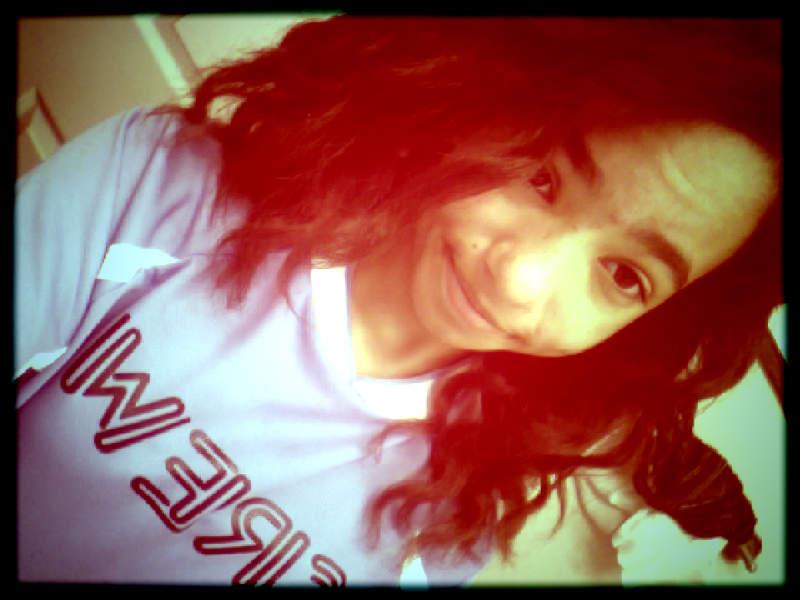
MMC recently featured a piece, "To Live and Die in Social Media" about the Amanda Todd and Felicia Garcia suicide tragedies, what did you think about these tragedies? Is there anything we can learn from them?
Zoë: I almost cried because of what they went through. To kill yourself over bullying? It really hurts. Really bad. We need to stay strong and not give up. Even if Amanda Todd and Felicia Garcia may have given up, we shouldn't.
What can adults and educators do to support and better engage young people who use social and digital media?
Zoë: Adults should have more school assemblies about bullying and start support groups on the Internet. More teens and kids around the world are on the Internet, so why not start there?
What are some ways young people can be proactive in addressing issues confronting youth?
Zoë: We can talk to each other about how we feel. Young people should have a say in what we are confronted with. Take the election for example, we have a say in the political process even though we can't vote. We still can have an opinion and share it with other people our own age.
We're so excited to have you on board as our official youth correspondent and contributing writer! As MMC's new youth correspondent, what topics would you like to explore, write about, and report on?
Zoë: I'm excited too! I'd like to write about current issues that are bothering young people like bullying, self-improvement, and just trying to fit in. Thanks for having me on board!
You can follow Zoë on Twitter @SnowieZoe - and we *so* recommend that you do!
Related:
Post-Hurricane Sandy Online Resources

A parking lot full of yellow cabs is flooded as a result of Hurricane Sandy on Tuesday, Oct. 30, 2012 in Hoboken, NJ. (via Facebook)
Back in 2005, after hurricane Katrina shattered the Gulf Coast, I began monitoring several online networks created and cultivated by what I called women virtual volunteers. Though Twitter and Facebook weren't around back then, women were created blogs, list servs, and newsgroups in efforts to provide relief support for victims and survivors of hurricane Katrina. This was the first time I witnessed people gathering across time and space to pull their resources online after a natural disaster. It's important to note that at the time, the nurture-networks I looked at were also created in response to lack of support from the federal government, namely FEMA.
Seven years after hurricane Katrina, the country has yet again been devastated by a natural disaster in the form of hurricane Sandy. People along the east coast, and parts of the midwest, are currently assessing widespread damage as a result of a massive storm surge lasting several hours.
As we saw during hurricane Katrina, people have taken to social media to help spread the word about damage and to provide resources for victims and survivors of the storm. However, unlike what we saw during Katrina; that is, when social media looked more like Yahoo! news groups and comments sections of blog posts, those directly and indirectly affected by Sandy have taken to popular social networks like Twitter, Facebook, and even Storify to provide the nation with up-to-date information and online resources. And it's not only traditional journalists and reporters creating these spaces, but also everyday citizens with a cell phone and a wifi connection.
In my continuing efforts to monitor online networks post-Sandy, I've put together a (growing) list of resources that I hope folks will find useful as we begin the arduous process of cleaning up after Sandy. If you have more resources to share, please do so below in the comments section. You may also tweet us @mediamakechange
IMAGES AND STORIES FROM THE STORM
ABC 7 Storify Hurricane Sandy: http://storify.com/EyewitnessNews/hurricane-sandy-1
Storify Users Cover #Sandy: http://storify.com/storify/storify-users-cover-sandy
AcuWeather: Sandy Floods New York City: http://storify.com/breakingweather/photos-sandy-floods-new-york-city-new-jersey
Hurricane Sandy Facebook Group: https://www.facebook.com/pages/Hurricane-Sandy/506493399380778?fref=ts
ORGANIZATIONAL SUPPORT
- Red Cross Hurricane app : http://www.redcross.org/mobile-apps/hurricane-app
- List of currently open Red Cross shelters at: http://www.redcross.org/nss/
- Visit the Red Cross web site: http://www.redcross.org or call 1-800-RED CROSS (1-800-733-2767).
- People should also register on the Red Cross Safe and Well website, a secure and easy-to-use online tool that helps families connect during emergencies: http://www.redcross.org/find-help/contact-family/register-safe-listing
@NotifyNYC on Twitter
- People located in NYC can ‘follow NotifyNYC’ on Twitter, and text 40404 to get @NotifyNYC (http://www.twitter.com/notifyNYC) tweets as text messages.
- Google Crisis map that has good information about Hurricane Sandy as well as shelter information: http://google.org/crisismap/sandy-2012
- A secure, user-friendly web portal that consolidates information about federally funded government assistance to disaster victims, including the ability to apply for FEMA benefits directly online: http://www.disasterassistance.gov
State Offices of Emergency Management
- A list of the emergency management offices in all 50 states plus territories: http://www.fema.gov/regional-operations/state-offices-and-agencies-emergency-management
- The Disaster Distress Helpline (DDH) is the first national hotline dedicated to providing year-round disaster crisis counseling. If you or someone you know has been affected by a disaster and needs immediate assistance, please call this multilingual, crisis support service (available 24/7) at (1-800-985-5990) and SMS (text `TalkWithUs' to 66746). Residents in the U.S. and its territories who are experiencing emotional distress related to natural or man-made disasters: http://disasterdistress.samhsa.gov/ toll-free number for information, support, and counseling. You will be connected to the nearest crisis center.
- Also see The Salvation Army's blog with up-to-date information on hurricane Sandy. http://www.salvationarmyusa.org/usn/www_usn_2.nsf
- You can email nycservice@cityhall.nyc.gov for more information on how to volunteer in your area. http://www.nycservice.org
- Be sure to visit their website BEFORE going to donate blood. Not all centers are open because damage due to the storm. We recommend that you call 1-800-933-2566 or visit www.nybloodcenter.org for donor center hours and the latest information. Thank you for your support. http://www.nybc.org/press-release.do?sid0=60&page_id=152&content-id=785
- Delivers medicines, medical supplies and aid to people in crisis around the world. http://www.americares.org/
- Provides medical assistance to people affected by disaster. http://www.directrelief.org/
Sources: Facebook, CraigConnects, Huffington Post
Related Stories: Hurricane Sandy: Red Cross, Other Relief Organizations See Social Media as 'Double-Edged Sword' For Relief Efforts
To Live and Die in Social Media: What We Can Learn From Amanda Todd and Felicia Garcia
On September 7, 2012, Vancouver teen Amanda Todd posted an 8-minute black and white YouTube video, "My story: Struggling, bullying, suicide, self harm" chronicling her struggles with being teased and harassed by fellow classmates. Todd doesn't speak at all throughout the video, and instead holds up placards in front of a webcam. Each piece of paper outlines her story while viewers are provided with a glimpse into Todd's experiences as a victim of cyberbullying, and as according to Naomi Wolf, a victim of adult male cyberstalking. Others have noted that Todd was also victim of slut shaming, or the idea of "shaming and/or attacking a woman or a girl for being sexual, having one or more sexual partners, acknowledging sexual feelings, and/or acting on sexual feelings" (Finally Feminism).
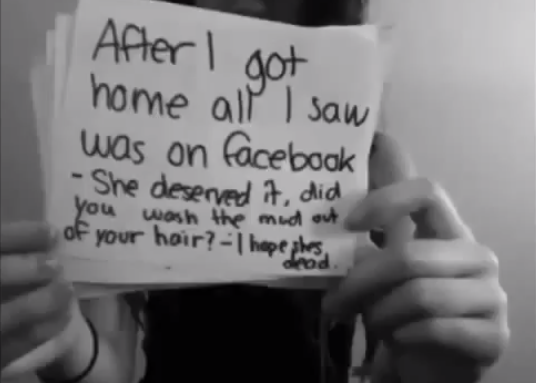
When describing an altercation she had with her classmates at school, Todd writes, "After I got home all I saw was on Facebook - 'She deserved it. Did you wash the mud out of your hair? - I hope she's dead.'"
On October 10, 2012, approximately one month after Todd posted the video on YouTube, she was found dead after an apparent suicide attempt.
On October 24, nearly two weeks after Amanda Todd reportedly committed suicide, Felicia Garcia, a Staten Island teenager jumped in front of a moving train in New York City. Friends and family said Garcia was bullied in school and online because rumors were spreading that she'd been sexually active with football players at her high school. The last words a friend heard Garcia speak right before falling backwards in the path of a moving train were, "Finally, it's here."
Though Garcia's classmates didn't seem to think she was in trouble, a quick glance at Garcia's Instagram pictures tells another story.

Similarly to Todd posting on YouTube, Garcia posted, what I believe to be her last cry for help via Twitter twelve days before she decided to take her own life.

It's heartbreaking to watch our young people take their lives as a result of being bullied by other teens and adults online. As a researcher, I wonder why our young people, girls and boys, decide to use social media as one of the last forms of communication before killing themselves. While it seems like a classic case of cry-for-help, social media further complicates this psychoanalytic narrative by the so-called spectacle in the form of retweets, @ replies, favorites, and likes.
I have to wonder what Amanda and Felicia felt while uploading and posting. What did they really wish to communicate? And has social media now become an alternative to the handwritten suicide letter?
I recently spoke with The Media Bytes about young people in the digital age. I mentioned Amanda Todd in our conversation, in that I believe we failed this young girl in many ways. We had access to knowing and seeing her struggles in a mediated and visible space, yet still we were unable to, or not willing to intervene. During the interview I mentioned that perhaps seeking out social and public spaces while struggling essentially comes down to our basic human need to connect with someone; anyone who will watch our videos and read our tweets.
I understand this need to connect all too well as I also struggled, and was diagnosed with severe depression and post traumatic stress disorder (PTSD) after my father passed away in 2008. I took to singing on Youtube early on while my father was sick. It was a cathartic response to coping with death and dying. It still is. I'm sure if I revisit my Twitter streams, Facebook updates, blog posts, and even SMS text messages during that time immediately after my father's death, I would see myself in my most rawest and vulnerable form. There was something about singing and talking to a camera, then uploading to a public site that allowed me to let go. To where and to whom I let go in this public space was, and is always a risk. But for Amanda and Felicia it was more than simply letting go publicly online, it was a permanent disconnection from a space so-called the 'real' offline world.
Now we are left with YouTube videos, tweets, and Instagram photos that will continue to remind us of our failure as a tribe in the global village.

That said, however, ubiquitous use and mainstream presence of social and mobile media provide a unique opportunity for adults (and anyone else who cares about the well being of young people) to better address youth in crisis. I recognize that the idea of 'crisis' itself carries with it a ton of baggage; what exactly is meant by crisis? Is crisis a word we only use for certain 'kinds' of communities? Is the very idea of wanting to un-do crisis problematic because it automatically assumes something needs to be fixed? And might that 'something' be the child? One look at the comment's section of this post, and the constant victim blaming that ensues, reminds me that we, as a collective, still haven't fully grasped what it means to be empathetic in a crisis situation. So, I recognize the conundrums.
But I also recognize that something unlike anything I've ever witnessed before is happening with our young people in this digital moment. We live in a hypermediated and interconnected world, so much so that we now craft our identities in these public and mediated spaces like corporations do; as brands. We've always created elaborate narratives of ourselves, but now it seems as though these narratives are beginning to take on a posthumous life of their own.
It's fascinating when you think about the posthumous digital life. Yet, I still wonder where do we stand in the midst of this crisis as our young people both live and die in social media?
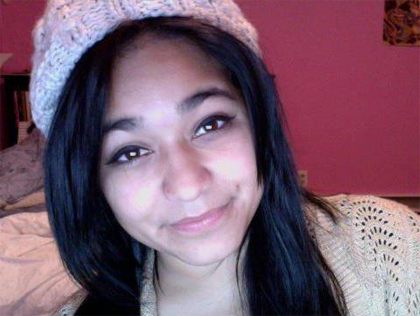
We simply can't be satisfied with mourning the deaths of these young girls after the fact and behind our computer screens. What keeps us from nurturing our young people while they are alive? What keeps us from engaging them as they explore their multiple and contradictory identities? What keeps us from being more attentive as they express themsevles in these public places---not as a way to police or to monitor inappropriate behaviors---but as a way to gain insight into what's actually happening in their media-rich, public, and interconnected worlds?
Part of what I wish to do as an academic and social entrepreneur is to create spaces where young people like Amanda Todd and Felicia Garcia (who was in foster care) can go to retreat, reconnect, and rebuild. And I believe media and technology can play a transformative role in mediating what I'm calling nurture-networks. But we have to be deliberate and thoughtful in how we further encourage media and technology in the lives of young people, particularly those in crisis.
I recently applied for the Media Ideation Fellowship and my idea is to specifically address the needs and concerns of young people in crisis, namely court-involved youth who are tethered to multiple social institutions like foster care, juvenile, and welfare systems. I'm hoping to create a localized SMS Texline co-developed by and serving the needs of court-inolved youth in New York City. While I understand that media and technology is not *the* answer to address ongoing and dynamic problems young people face in today's world, I do believe that media and tech tools can help to support deliberate efforts in (re)building what's seemingly been broken. As evident with Amanda Todd and Felecia Garcia, our young people are living and dying in these social and mediated spaces, isn't it about time we meet them where they already are?
**Update***
I just discovered that Amanda Todd sang too.