The Need to Educate the Rich Kids of Instagram
From My MEDIAted Life
There is a new Tumblr page that has been getting quite a bit of attention in the last few weeks. It's got an unoriginal, yet strangely catchy title that would cause almost anyone to click on the link: Rich Kids of Instagram. Your finger might hover over the mousepad for a moment--sure that it could not possibly be what the straight-forward label is seeming to describe, yet weary that it most likely is--you wonder if this is what you should be doing with your time? Should you throw a load of laundry in before you make this time commitment for something you might later regret, or worse, that you might absolutely love (but not be able to tell anybody about)? But like so many other viral videos and Internet memes, in which a mere click stands between you andknowing what everyone else is talking about, this site wins over any rational thought, and just like that you feel the pad of your index finger make contact with the cool sensory surface beneath it.

As soon as the URL loads and the site opens, you dive face-first into a scrolling cluster of photographs and hashtags. The images have all presumably been taken by smartphones (most likely iPhones) and have been enhanced through an application called Instagram, which adds different filters to digital pictures and allows them to be uploaded to various social networking platforms (i.e., Facebook, Twitter, Tumblr, etc.) instantly and seamlessly. The subtitle of the site is "They have more than you and this is what they do," and the hashtag is #rkoi. The images are first uploaded by the young people who snapped the shots to the RKOI's Twitter account and are then fed onto the Tumblr page for easy viewing.
The pictures are displayed in gold frames, suggesting that they are pieces of fine art and conveying an obvious and assumed air of wealth, high culture, and importance. Below each image we find numerous hashtags that the artists have used to 'describe' their masterpieces: #mansion, #wealth, #yacht, #personalchef, #cartier, #NBD (no big deal). The seemingly endless collection of photographs are obnoxious, yet every time I visit the site I find myself clicking from page to page, thirsty for more, even if I've seen the same images four or fives times at this point. What is going on?!As hard as I try to maintain that I am fascinated by this warped website solely for critically analytical and research-related purposes (I'm making a very serious face while saying this), the reality is that I have been 'trained'--socialized and normalized--for decades now to associate the types of images and messages depicted on this site with notions of what "happiness", "success", "popularity", etc. look like; what they mean. If I am having these reactions as a 28-year-old, we must seriously consider how teens might be viewing this site and think about the kinds of conversations that we as educators, adults, parents, can have with the young adults in our lives.
1. The subtle effects and implications of the gold-frame template:
While viewers might feel as if they've become numb to composition after streaming through dozens of images, there is an undeniable novelty and uniqueness in seeing photographs, not oil paintings, housed in these garish golden frames. Instead of invoking a simulated feeling that we are strolling through the quiet rooms of art gallery or museum--observing these masterpieces interspersed on stark white walls--the juxtaposition of the bold, saturated, filtered photographs with the chunky golden frames instead creates a feeling of voyeurism among viewers. We are outsiders being granted access to certain snapshots, postage-stamp views, of what life in the 1% is like.
What might this voyeurism mean for both the creators and consumers of these images? There is an extreme sense of excitement on both ends: for the creators of these media images and messages--they are sharing their lived experiences and material possessions with their peers (and now with wider audiences). Hell, at 14-, 17-, even at 25-years-old (especially in the age of social media and social networking sites), there is a certain undeniable, almost unavoidable [I said almost] narcissism that runs rampant in users' status updates, photos, etc. It's the nature of the beast, but it doesn't make it ok, or mean that we simply and passively accept that this is just how people can and should act as a result. We still must consider, now more than ever, what effects these displays of wealth, materialism, lifestyle and activities might have on the "99%" who have been socialized to perhaps think this representation is 'covetable', on the "1%" who think this representation is "normal." And what it really comes down to is that we should really be taking into account the possible effects that these representations are having on100% of today's youth. Virtually almost (again, almost) every young person in the US is exposed to and interacts with some sort of media on a daily basis--using a cell phone, playing a video game, surfing the Web, or watching television. Today's youth are growing up in an increasingly media-saturated culture and we have a responsibility to help them learn how to successfully navigate their lives through the unprecedented products, behaviors, and activities now being "the norm" in the 21st century.

2. Understanding digital footprints & increasing awareness about digital citizenship:
On August 10, 2012, an article was published on the Bloomberg Businessweek website entitled, "The Very Real Perils of Rich Kids on Social Networks". The article provides an account of how some recent online activities of Alexa and Zachary Dell, daughter and son of Michael Dell (of Dell computers), got them their 15 minutes of Internet fame as well as a terminated Twitter account after Alexa posted a photo of her brother in their private jet, heading to Fiji on RKOI. It was later discovered that this was just one of numerous photographs and statuses containing personal information about her family's whereabouts and activities that she'd posted over the last few months. Mr. Dell pays almost $3 million a year for security protection of his family, so needless to say, this breach of security from an insider was probably both alarming and upsetting. This article provides a powerful illustration and example not only of how quickly information spreads via new media platforms like Twitter and Facebook, but more importantly how easily this information can directly challenge others' efforts of enforcing tangible security measures. In addition, and most importantly, this article serves as an excellent example of the lack of awareness and/or regard that young people tend to have for the often permanent digital footprints that they create as a result of their online activities, particularly on social networking sites. And while some may argue that there are greater implications when the rich (and not necessarily famous) upload pictures of everything from party invitations with the date, time, and location to license plate numbers (all of which can easily and automatically be geo-tagged) to the Twittersphere, the reality is that this online behavior/activity of constantly over-sharing details about their lives can have very real consequences, regardless of one's social class. In a recent New York Times article on the recent upsurge of 20-somethings sharing TMI (too much information) in the workplace, Peggy Klaus, an author and executive coach of corporate training programs explains,
Social media have made it the norm to tell everybody everything...MANY people blame narcissistic baby-boomer parents for raising children with an overblown sense of worth, who believe that everything they say or think should be shared. When I told a British colleague that many Americans were starting to realize that they reveal way too much about themselves, he gave a full-throated laugh and said, “Finally!”
While our first instinct may be to want to protect youth, the takeaway here is not that we need to shield young people from the media tools and content that might cause them to engage in risky activities and behaviors. Instead, we should regard the situation with the Dell children and the realities of the millennial generation outlined by Klaus as important illustrative examples of the fast-forward-moving trajectory that our society and culture is travelling on. As educators, parents, and adults in the 21st century, we have an opportunity and obligation to use these examples to engage the youth in our lives in conversations about digital citizenship, which can include topics of online safety and privacy, cyberbullying, and copyright fair use of online information; media literacy, understanding how and why media messages are constructed and how they can influence beliefs and behaviors; and digital literacy, how to read and evaluate information online.
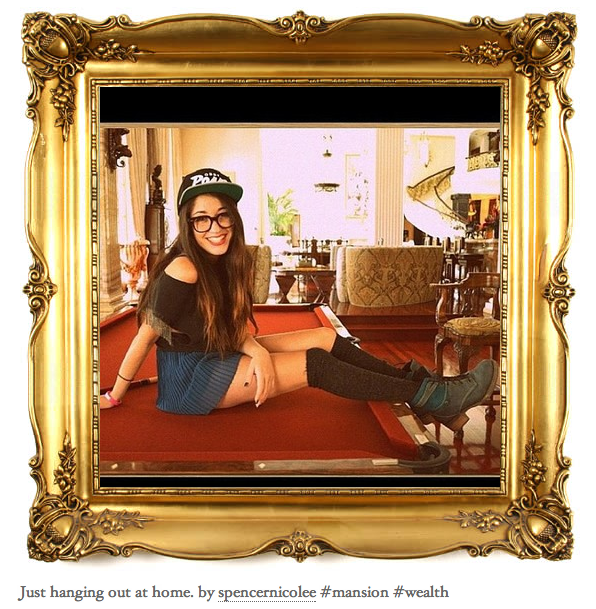
Use the images on RKOI to ask youth about who they think the image is intended for, what attracts their attention, what lifestyles and behaviors are represented, how different people might interpret the images and messages differently, and what they think may have been left out of the image and why? A conversation about the composition of both the photographs and the website itself—having students think critically about representation, communication, and production—could be integrated into an English lesson on writing about and showing one’s lived experiences through words and images; a social studies lesson on the powerful images and messages from the Civil Rights Movement, juxtaposing them with the very different content displayed on RKOI (in which case, it would also be crucial and a unique way to address issues of race, gender, and class as they relate to both sets of images and messages); or a computers and technology lesson focusing on the dos and don’ts of web-design.
The bottom line is that we must have conversations, many multi-layered conversations, with each other and with youth about sites like RKOI: about the activities and lifestyles represented, as well as the online and offline behaviors fueling the creation of and participation in such sites. It is ok and very normal to want to protect our youth from the unknown, but we’re doing ourselves and them a disservice if we think that leaving these unprecedented realities unaddressed is better than sinking our teeth into them in order to proactively figure all of this out, and we need to do it together--parents and children, teachers and students, peers to peers, or else we're never going to get anywhere.
Emily Bailin is a doctoral student at Teachers College, Columbia University. She's also an an educator, consultant, and public speaker motivated by a passion and determination to collaborate, create, and sustain culturally relevant and socially just pedagogy with other educators to better serve increasingly diverse 21st century learners. You can follow her on Twitter at @emilybailin
Nominate Tara L. Conley for 2012 Media Ideation Fellowship
Dear family and friends,
I’m writing to you directly for your support in nominating me for the 2012 Media Ideation Fellow (Graduate Level).
The Media Ideation FellowshipSM is an investment in a new generation of social entrepreneurs. Fellows will receive financial resources and mentoring to help bring an early stage idea to life. The Media Ideation FellowshipSM is an opportunity for young innovators to test assumptions, research target audiences, and build strong business plans.
The Media Ideation FellowshipSM is designed to further progressive, social justice-oriented causes. Ideal applicants will have a specific issue or challenge they are looking to address over the course of their fellowship. Projects can be broad in scope, or a simple tool that will help resolve a social inequity or lead to progressive social change.
Why Media Ideation Fellow?
As a Media Ideation Fellow, I will receive a three-month fellowship with a $12,000 stipend and support from mentors in the fields of media and technology.
As some of you may know, since 2010, I’ve dedicated my time and energy to build MEDIA MAKE CHANGE’s brand as best as only one woman could while living in a shoebox apartment located in Harlem, New York. I'm happy to report that as of this summer, MEDIA MAKE CHANGE is officially an LLC in the State of New York. I now seek additional mentorship and financial support to expand MEDIA MAKE CHANGE into the world’s leading incubator for media and technology innovation, ideas, and perspectives for social good.
Specifically, I want to extend MMC's online and mobile platform by building an interactive Call-to-Action Challenge portal (CTAC) that will enable mediamakers, programmers, and designers to submit original ideas and projects that can transform communities and civic engagement practices.
Think: Tech Challenge meets Media That Matters meets Kickstarter.
MEDIA MAKE CHANGE will issue various challenges and calls to action throughout the year so that innovators will have the opportunity to submit their ideas and projects via the CTAC portal, where the public can also make monetary donations.
Challenge prompts might look like the following:
- Submit an idea to create a web or mobile platform that will help voters in your neighborhood locate voting polls on election night.
- Submit an idea to create a web or mobile platform that can help organize constituants to support or protest against a policy-based issue.
- Submit an idea to create an animated short that will inform people about proper recycling practices in your community.
- Submit an idea to create a web series that will explore the lives of women and girl gamers.
- Submit an idea to create a web or mobile platform that will monitor street harassment and bullying in your neighborhood.
- Submit an idea for a digital documentary that explores an issue or perspecitve in the LGBTIQ community.
- Submit an idea for a robot that can assist elderly individuals with daily tasks.
- Submit an idea for a mobile or web platform that can help victims and survivors of environmental catastrophes locate family members, pets, and/or food supplies.
- Submit an idea to create a web or mobile platform that can aid victims of domestic violence and sexual assault.
- Submit an idea to create a digital documentary that explores colorism across various racial and ethnic communities.
The list goes on.
Innovators can set their own funding goals, and successfully funded projects will receive all donations (minus fees).
Unlike established crowdfunding platforms on the web, MEDIA MAKE CHANGE will create specific challenges for media and tech innovators to explore and submit their ideas to. Don't expect to see projects that will fund tech start-ups or music albums. Instead, MMC's CTAC portal is specific in its challenge prompts, content, and design. Only media platforms, projects, and tech gadgets/apps will apply.
My Herstory
I've spent the last 10 years of my life working and playing as a writer, educator, and mediamaker. Over the past decade, I've had the opportunity to work with well established progressive organizations, and learned a great deal about the power of digital media (in all forms) and technology to support causes and promote democracy.
Currently, as a doctoral student studying technology in education, I'm now learning about the importance of computer programming technologies in shaping an entire generation of girls, youth of color, and immigrant learners.

I'm proud to have founded a company that highlights issues relating to media education and technology innovation in efforts to help support communities, confront social injustices, and impact technology policy.

Over the past two years, MEDIA MAKE CHANGE has already established a proven track record in multimedia development by helping to produce the Beyond the Bricks media literacy curriculum and create new media and digital video campaigns for the Schott Foundation for Public Education.
MMC’s blog Media Speaks! has featured original, insightful, and critical content in the area of media literacy, advocacy, and technology innovation.
In the summer of 2012, MEDIA MAKE CHANGE facilitated an online cross-cultural dialogue with In Conversation, a monthly feature that highlighted women of color programmers and mediamakers. Additionally, MMC led a nationwide social media and digital storytelling campaign with #RememberKatrina to bring awareness to environmental and social issues facing citizens living in Louisiana and surrounding states. MMC is also currently working with social entrepreneurs to produce successful crowdfunding campaigns.
Looking ahead, I want to solidify MEDIA MAKE CHANGE’s place in digita media and social justice history by incorporating a dynamic interactive platform that will inspire people to use media and technology to change their communities for the better.
As a Media Ideation Fellow, I will be able to take change agency to the masses with the help of mentorship and financial assistance.
With the support of the Media Ideation Fellowship, I will be able to:
- research established crowdfuding, educational technology, media education, and progressive online platforms
- develop proposals and business plans for potential investors
- gather a team of official MEDIA MAKE CHANGE mediamakers and content producers
- design and develop MMC’s interactive Call-to-Action Challenge (CTAC) portal
The fellowship will afford me the time to conduct research and produce work that will reflect an expansion of MEDIA MAKE CHANGE's brand and mission towards interactivity and civic/community engagement.
In order to accomplish this and more, I’m asking for your nomination for the 2012 inaugural Media Ideation Fellowship.
How to nominate me
You can support by simply going to http://mediaideation.org/nominate/ and filling out the information provided below:
- My name: Tara Conley
- My email: tara@mediamakechange.org
- Check the box for “Graduate Level” fellowship.
I sincerely appreciate your love and support.
Tara
NOLA Native Shares Scenes from Hurricane Isaac
Our friend Marcus Akinlana has graciously allowed MEDIA MAKE CHANGE to share his photos from the aftermath of hurricane Isaac. I spoke with Marcus yesterday and he told me that he and his family decided to stay in NOLA, bunker down and wait out the storm. Their homes sustained minor damage, but surrounding areas weren't as fortunate. Marcus told me that Plaquemines Parish got hit harder this time around than in 2005 when hurricane Katrina ravished the city. It's hard not to remember Katrina's devastation while looking at the scenes and images below.
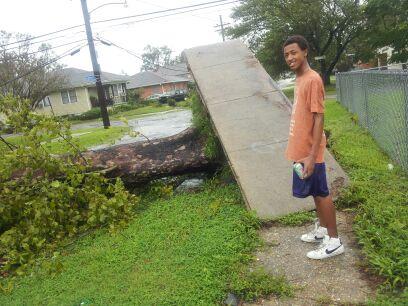


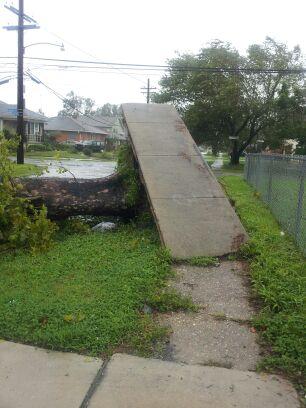
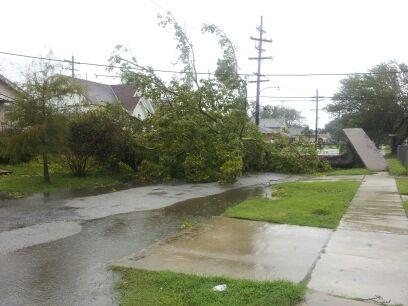

I asked Marcus if there is anything we can do to help support recovery efforts. Marcus told me,
"You are a sweetheart! I don't know what to tell you but when it all calms down make a trip to NOLA and come party with us. That's what we like. Come join us on Sunday evening in Congo Square. That'll help. When you can afford it and make the time, come."
As I plan for another trip to NOLA, I'll continue to keep my neighbors the the south in my thoughts and mediations. You can also help by contacting the Red Cross at 1-800-RED CROSS or texting "REDCROSS" to 90999 to make a $10 donation. You can also follow @NOLANews on Twitter for further updates.
Please share your resources, information, and stories below in the comments section and on Twitter using the #RememberKatrina hashtag, and by following @mediamakechange.
Related stories
BP to donate $1 million for Isaac recovery efforts (LSU Reveille)
Verizon Wireless supports hurricane Isaac relief (Sacramento Bee)
#RememberKatrina: A National Conversation Through Digital Storytelling

In 2005 I didn't know what digital storytelling meant. The term had never crossed my mind. I just remember feeling compelled to tell a story with my old Panasonic Camcorder PV-L779D. I was a citizen journalist with a Myspace blog who aspired to be a documentary filmmaker.
Six months fresh out of college and less than a year into my first real teaching job in Houston, Texas, I found myself tracking cable news and Internet stories about the aftermath of hurricane Katrina. Twitter and Facebook weren't in my life at the time so Bill O'Reilly, Anderson Cooper, and Yahoo! News were the next best things. In one day, I had listened to over fifty televised broadcasts coming out of NOLA that highlighted missing children, dying grandmothers, and dead animals. I became obsessed with these stories to the point at which I too became depressed. I found refuge in blogging on Myspace about my experiences meeting survivors, which would later be archived in the Hurricane Digital Memory Bank. But as a twenty-four-year-old middle-school English teacher, I struggled to talk with my students about a natural disaster that happened 350-miles away. I couldn't articulate the calamity of a national tragedy using only words.
When I heard that survivors from NOLA were being bussed to the Houston Reliant Center--my backyard at the time, I dusted off my Panasonic camcorder and headed down 288-South. I didn't know what story I wanted to tell, I just knew that I wanted to talk with survivors and document their stories without the punditry, political diatribes, corporate influence, and commercial breaks. I also wanted to tell my story as a volunteer with the Red Cross.
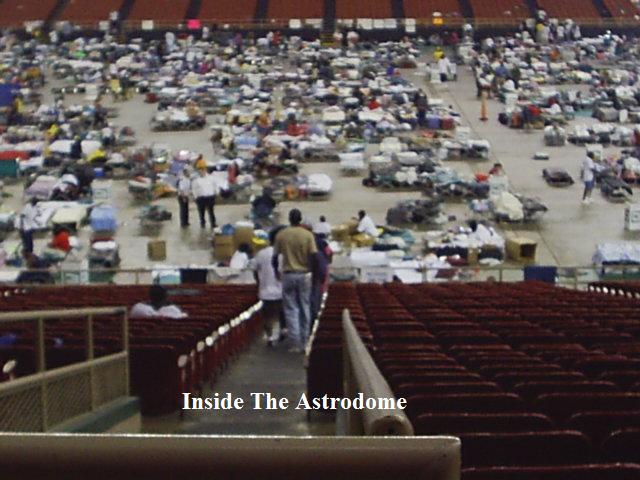
During those few weeks of volunteering, I had the opportunity to get to know survivors through storytelling. I listened to them talk about how lucky they were to be rescued from the top floors of their homes and rooftops. They told me about losing all confidence in their local and state governments. Some stories I heard while standing in-between cots. Other stories I captured on camera while standing outside of what was then called "Reliant City".
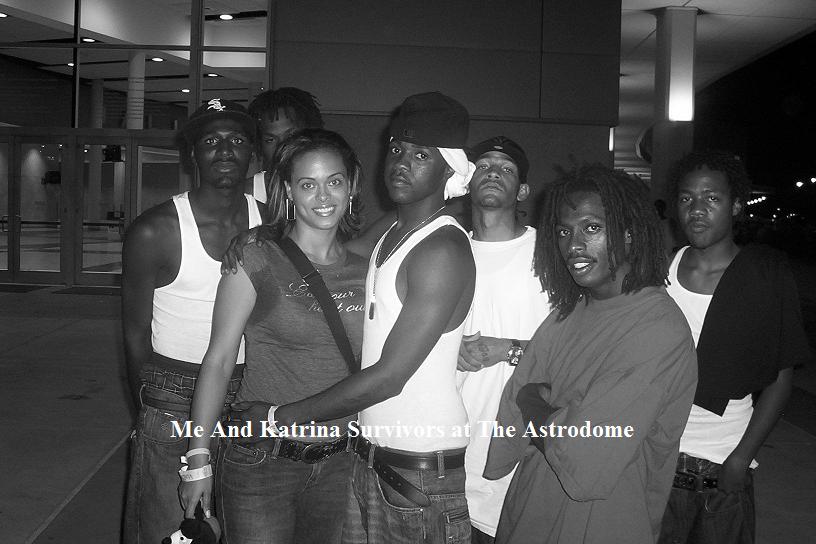
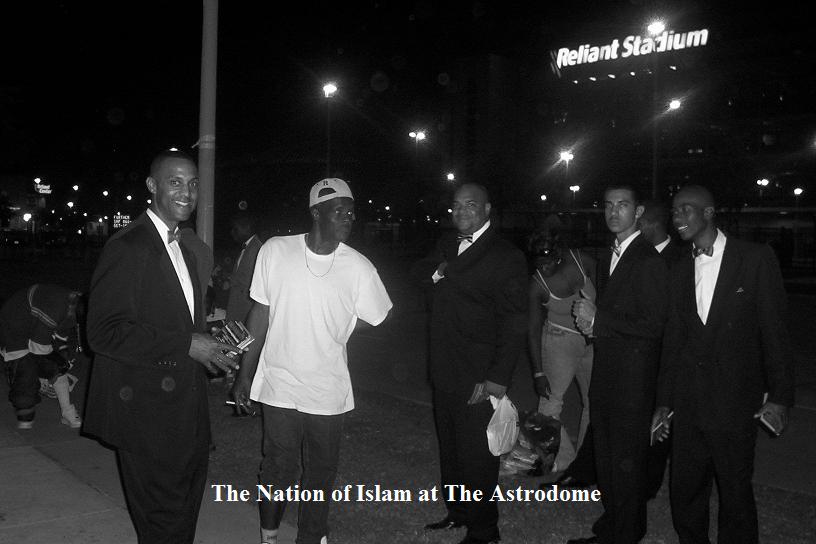
After hours of volunteering and recording, I returned home mentally drained and emotionally depleted. I crawled into bed and turned the camera on myself. "This shit's getting to me," I said whipping away tears. "I can't go to sleep because I keep thinking about these people. I just want to help them." I was overwhelmed by the reality that the lives of 70,000+ U.S.-Americans would be consequentially altered forever. I knew that our country would never be the same. She'd be forced to confront a sordid past of racial inequality and political ineptitude, long before President Obama would become president 3 years later.
Looking back at the moment I broke down on camera, I realize now that I sounded like a naive and idealistic child. I thought that maybe documenting my tears and curses on camera could make a difference. I didn't realize I was up against a nation of forgetters.
The Statistics
Since hurricane Katrina there remains approximately 35,700 blighted homes and empty lots in New Orleans alone. The NOPD recently reported a 10% increase in overall crime in the city. Residents in neighboring states like Mississippi who were also affected by Katrina have seen noticeable spikes in insurance payments. For many neighborhoods affected by Katrina all that remain are cement blocks and overgrown weeds where homes once stood. Among the most devastated neighborhoods in NOLA is the Lower Ninth Ward, comprised of 95% African Americans. Despite $14.5 billion in floodgate and levee reconstruction, neighborhoods like Lower Ninth Ward remain noticeably neglected. Though NOLA has seen a diverse population increase since hurricane Katrina, its economic, social, and environmental trends remain troubling. Job cuts in major industries like tourism, oil and gas, and shipping, coupled with unaffordable housing costs, high crime rates, and loss of wetlands contribute to the mounting problems the Big Easy currently confronts since hurricane Katrina.
In efforts to remember our history, MEDIA MAKE CHANGE has launched #RememberKatrina, a national conversation through digital storytelling and social media. All this week, beginning Monday, August 27th through Friday, August 31st, MEDIA MAKE CHANGE (@mediamakechange) will engage in a national conversation with people around the country affected by hurricane Katrina. We begin our conversation on Twitter with several invited guests who will talk about their experiences and research related to hurricane Katrina. The goal is to get as many people talking on social networks, blogs, and via digital video. We believe that the power of storytelling can influence social and political transformation.
#RememberKatrina Is Personal
When I look back at the beginning of my journey as a media maker and educator, I see hurricane Katrina. I recognized that the events leading up to, during, and after the storm inform my current practices as an educator and media maker. These events made me a stronger listener, and in turn, a better storyteller. I learned how to pay attention to what wasn't being said so I could seek out what actually should be told. I developed a sharper eye so I could see through the propaganda and towards counter-narratives for truth-telling.
Since 2006, I've used my amateur documentary about hurricane Katrina, A Region of Survivors to connect with various communities. I've presented my work at universities, community centers, and conferences across the country. As a result, I've engaged professors, students, and community organizers to think critically about social, economic, and political issues relating to the most devastating (un)natural disaster in modern U.S.-history. I parlayed digital documentary, and subsequent other media, to build a community of rememberers. All this because of a storm and some broken levees.
Tell us your stories and join the conversation on Twitter all this week using the #RememberKatrina hashtag.
Lucky: A Katrina Survivor
The following entry is from a 2005 Myspace blog post that I wrote on the first night I returned home from volunteering with the Red Cross in Houston, Texas. The events took place some time around two weeks after hurricane Katrina struck the Gulf Coast. Please do not re-print or re-distribute without express written consent.

Lucky and me (2005)
Current mood: nostalgic
Category: Blogging
A true story.
Every night I stepped foot inside the Astrodome in Houston, Texas I was draped with grief from thousands of New Orleans survivors. Each night I walked away from the Dome I was determined to cleanse the muddy perception I had of my own life.
I walked self-consciously between the cramp isles of Red Cross cots spread across the Dome floor. An elderly man in a wheel chair followed closely behind. When I saw him I thought he would be a perfect person to approach since it was our job as volunteers to initiate conversation with residents staying at the Astrodome. Some survivors were in need of blankets and toiletries, others just needed someone to talk to. I've never been comfortable initiating conversations with complete strangers, especially knowing that they've been through so much hell. I couldn't possibly empathize with what the survivors have just gone through. I was nervous and felt out a place. Half of me didn't want to be there.
The old man slowly wheeled his way towards me. I still couldn't speak. Then my father, who came along to volunteer with me, turned toward the old man.
"Hey buddy, how ya doin?" He asked.
Daddy could talk to anyone. I secretly envy him for that.
I was glad Daddy came along, not just as buffer, but because it's been a long time since we had a chance to do something together as equals. I've spent so much of my adult years trying to be the mother to my father instead of just being his daughter.
I stood there looking at the old man, feeling invisible, wanting to say the right thing, but couldn't. Daddy spoke again.
"How did you get here?" Daddy asked.
"Luck," the old man responded.
Daddy asked the old man his age. When he said that he was born in 1930, an immediate pact was formed between the two of them.
"You were born in 1930?" Daddy asked as if he didn't hear him right the first time.
The old man nodded.
"So was I."
Daddy shook the old man's hand, and within an instant that unspoken gesture launched a spontaneous camaraderie between the two and forced me even further away from their pact. Their connection made me inadequate. I wanted to bond too. That was my job as a volunteer.
The old man told us about how he escaped from his home in New Orleans just in time before the water began to swallow his house. He was sleeping when the hurricane hit landfall. People from outside were screaming for him to get out of the house. Something, he told us, woke him up . The next thing he remembered he was being rescued by boat floating down the street.
"I'm just grateful my wife died years before all this. She wouldn't have made if she was there with me when Katrina hit. She was sickly." He told us.
He talked about his late wife as if she was still alive.
"We got married when we was young. It's our 50th anniversary this year." He told us. I looked at Daddy. His eyes were glazed over.
The old man told us that the he was rescued by a U.S. Coast Guard, who then took him to the Convention Center in New Orleans. He spoke about the horrific conditions inside the Convention Center. No electricity, feces and garbage mounting as the hours passed. He talked about hearing rumors that little girls were being raped at night. He felt abandoned.
"Horrible, just horrible!" He shouted while shaking his head.
He said that people feared they would die and blend in with the already dead. Optimism quickly turned into fatigue. Hopelessness took over and darkness filled the arena, forcing imaginations to scamper untamed.
I stood frozen in the telling of his story. My eyes locked in to his words. Though I couldn't hear what he was saying, I could see every syllable of every word drip from his mouth. It was the rhythm of his words that held me in slow motion. The more he reflected upon a history only two weeks old, the lower his eyes fell toward his lap. He was visibly tired.
"I don't have nothing no more. All my things is gone."
"What all did you lose?" I finally asked, breaking my stream of conscious thoughts.
He told us that he lost his home and everything in it.
"But even though my stuff is gone, I'm lucky cause I still got my life. I'm so lucky."
After an hour of talking, Daddy and I decided to pack up our things. It was getting late and volunteer hours were almost over. Before I said goodbye, I promised the old man that I would come back to visit. The old man looked at me.
"You coming tomorrow, right?" He asked.
"Of course. I'll be here," I said.
He told me to reach down under his bed. He had a gift for me. It was a rose. Some family members on the other side of the Dome had stopped by his cot earlier with flowers. He told me to take one just in case we don't see each other again.
Daddy and I left the Dome around 9 o'clock. During our ride home we talked the entire time like two old war vets reminiscing after decades of being apart. When I realized that we never got the old man's name, Daddy said, "we'll call him Lucky."
Tell us your story on Twitter using the #RememberKatrina hashtag
Follow us @mediamakechange