When Qualitative Study Goes Wrong (MSTU 4020; Week 10)
Maybe the title's a bit hyperbolic and maybe I'm a bit frustrated with some of the readings this week because my brain is fried and it's 1:00 am.
Nonetheless, I found The Benefits of Facebook "Friends" profoundly cumbersome. I will concede to the fact that my view of any scholarship on Facebook at this point is nauseating. I feel like we're all staring at a chimpanzee at the zoo as if to study it from a distance only to realize the chimpanzee is really our own silly reflection in the glass window. We're hell bent on finding something "new" or interesting about something that's not really that new or interesting anymore -- at least that's what it seems like. The initial response to Facebook was certainly warranted. Mark Zuckerberg's a genius. Social networking is sexy. And algorithms are the new black. I get that we're entirely obsessed with wanting to understand more about ourselves and our communities. The Internet is a fantastic means of seeing and studying those ideas. But what are we truly getting out of it all?
I have a hard time wrapping my brain around how qualitative studies like The Benefits of Facebook "Friends" have managed to quantify bridging, bonding, and maintaining relationships to the Cronbach’s alpha statistic. This is utterly mind boggling. As I tried to skim the article for definitions of what the authors mean by bridging, bonding, and maintaining relationships, all I found were references to other authors' scales, followed by some random (okay, not random) equation. *pulls out hair* Do we really need statistical data to represent an understanding of how people feel and interact on Facebook? Granted, maybe we do, but boy-oh-boy western society sure does pride itself on rationale and objectivity through scientific measure, even to the point that something qualitative must be quantified.
The fact that nearly all Facebook users include their high school name in their profile (96%) suggests that maintaining connections to former high school classmates is a strong motivation for using Facebook.
Um, okay. Fascinating stuff. So what about those who don't include their high school names, are they less likely to want to maintain connections to former high school classmates? What if the motivation to not include their high school name has absolutely nothing to do with maintaining connections with former classmates? What if that 4% still wants to (and do!) maintain connections, but inserts "High School of the Gifted Pocket Protector Posse" in their profile? What's truly in a name?
This excerpt is really only a small (and silly on my part) example of how quantitative data seems, to me anyway, pointless in the realm of study that's overwhelmingly qualitative.
We've already discussed how complex identity (and identifying) works within digitally connective social spaces. Some of these findings, for instance, do not speak to those complexities or nuances of identity representation and formulation whatsoever.
This particular reading, along with some of the others, brings me back to an issue that I've been thinking about throughout this semester. That is, how do we go about researching digitally connective social spaces? What do we, as researchers and educators, need to consider as it concerns emerging ethnographies in the field? I'm nearly convinced that some of the ways in which we've been going about these "studies" are wrong. And I'm not sure what the alternative is at this point. But it does seem as though we're applying odd and useless methods to a complex area of study.
What of these so-called "findings" is necessary (found on p. 1147)?
- Hypothesis 3a (supported): The relationship between intensity of Facebook use and bridging social capital will vary depending on the degree of a person’s self esteem.
- Hypothesis 3b (supported): The relationship between intensity of Facebook use and bridging social capital will vary depending on the degree of a person’s satisfaction with life.
Talk about mixed ideas; self esteem, social capital (what an abstract notion!), bridging. Is this a psychology study or a study I'd find in a business journal? Even the languaging is wretched.
Aside from the study itself, I worry that the lure of researching SNS outweighs it's effectiveness for educators and scholars. It only seems that these sort of studies are useful stats to inform media soundbites or marketing/PR talking points, but what value do they have toward our understanding of phenomena in communication, societal shifts, technological usefulness, and education (beyond what we already know about physicality, virtuality, embodiness, etc.)? Maybe I'm bothered that the studies aren't moving as fast as the technology itself. Or maybe it's that the studies aren't broad enough in scope (what about Twitter?). Or maybe it's the lateness of the hour and the moment of intellectual exhaustion. Whatever the case maybe, I recognize something unsettling in my gut about all of this sort of research. I really want us to go somewhere with it, to see something truly remarkable about who we are as people and as communities. I want this area of study to inform what else is out there beyond our localities and our realm of awareness. But I just can't see anything biting beyond the proverbial glass window.
On another note, thank God for SuperNews.
Can Our Imaginations Survive in the Age of Digital Connectivity? (MSTU 4020; Week 9)
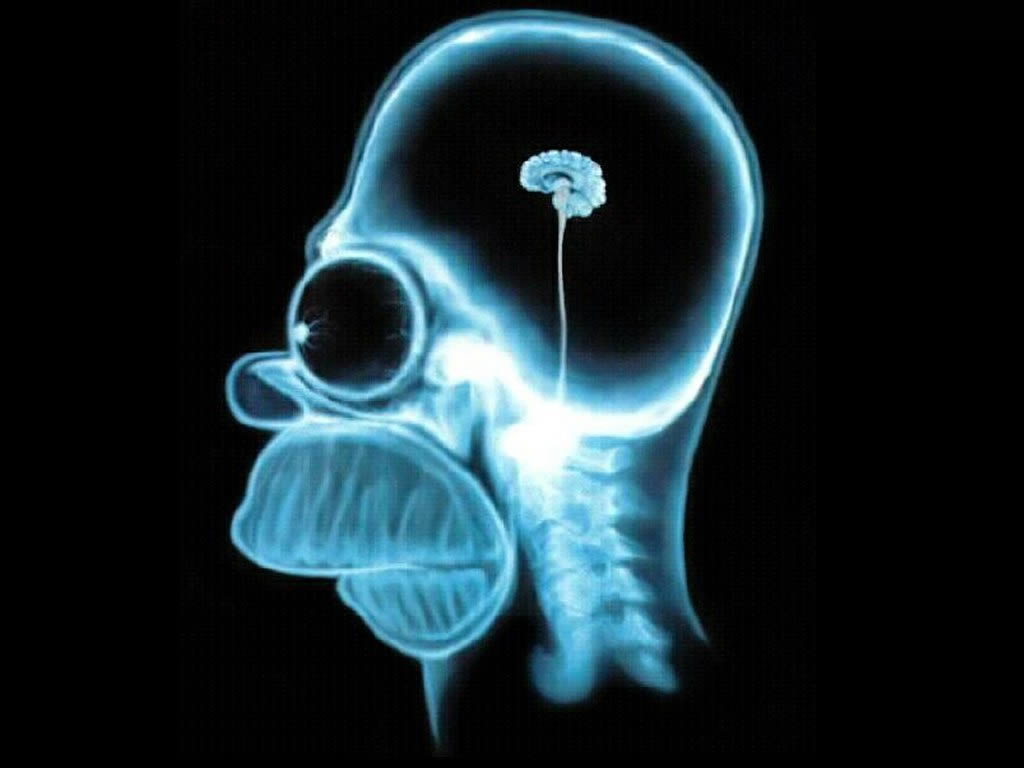
That's why I don't have a phone. I don't have a Blackberry. I'm not connected like that because I'd rather be thinking. - Dr. David Helfand, Chair of the Department of Astronomy at Columbia University & president of Quest University in Canada.
Last night, I attended the Veritas Forum at Columbia. The topic of discussion focused on truth beyond science featuring scientist Dr. David Helfand (atheist) and Dr. Kenneth Miller (theist). I stayed after the panel discussion to listen in with others ask Dr. Helfand questions about truth, science, God, the universe, and all that jazz. Somehow the mini-discussion turned into a philosophical debate about the brain, perception, and thinking patterns. Amidst the lively chat, Dr. Helfand mentioned that he doesn't own a cell phone mainly because he'd rather be thinking. For Dr. Helfand, the idea of being constantly connected to a digital device intrudes upon how he prefers to think contemplatively and reflectively on a daily basis.
The New York Times article Attached To Technology and Paying the Price reminds me of Dr. Helfand's remarks last night, and it also reminds me of my own meta-relationship with digital connectivity. I eat, sleep, and breath this stuff. Though just as I study it, play with it, and communicate with it, I find myself wanted to get away from it more and more. How is this possible? As I work my way through a doctoral program that emphasizes the use of technology in educational environments, I struggle with exactly where I stand on the technological determinism spectrum. Though, so far through this process, I've become more comfortable in my intellectual skin to assert that it's our use of the imagination, rather than the use of technology itself, that is the most revolutionary act.
Just as the NY Times article alludes to, our brain make-up is changing. Our multi-tasking behaviors within the digital age affect how we think, how we remember, and how we act. Another scholar, Sven Birkerts, wrote also about Reading in a Digital Age last spring in relation to how our brain reads and imagines text.
This idea of brain re-wiring is an interesting one because it asks us to consider what's to be said for the vast amounts of information we consume through digital connnectivity. Steven Yantis, a professor of brain sciences at Johns Hopkins University, seems a bit less worried about this sort of rewiring: “The bottom line is, the brain is wired to adapt . . . There’s no question that rewiring goes on all the time.” Is this type of shift in brain wiring any different than, say for instance, when written language was introduced to civilization for the first time? Surely, brains were rewired as oral culture was introduced to the written word.
As we consume all of this information, what is the affect on the transference of knowledge? Without having performed any studies, I can only guess that all learners aren't necessarily applying or transferring the information they acquire into knowledge that can be represented and produced. It's one thing to perform a Google search, but it's an entirely different notion to synthesize the information acquired through Google searches into something critical that can ultimately produce knowledge.
I'm reminded of what professor John Black said in my Cognition and Computers class this semester:
The imagination is necessary for transference.
Makes sense.
So, as more media we consume and the more digitally connective we become, what happens to our imaginations, to our thinking processes of reflection and contemplation? Can our imaginations survive in the digital age?
Trying to Move Forward (MSTU 4020; Week 8)

This is exactly what I look like while typing this post & trying to narrow down a topic for the final project (except for the blond hair).
This week's prompt ask 1) What do I think I need in order to move forward on a final project? and 2) how can I get what I need?
The assumption is that I've identified some themes and I've begun to refine my questions. I've certainly identified some themes, though it seems that while trying to refine my questions only more of them spring up. For instance, after reading Nicholas W. Jankowski's article "Creating Community with Media: History, Theories, and Scientific Investigation, I began to ask myself more questions related to Baym's (1999) questions:
- What forces shape online identities?
- How do online communities evolve overtime?
- How does online participation connect to offline life?
- How do online communities influence offline communities?
I've asked similar questions throughout the semester (though stated a bit differently). Here's what I have so far:
- What is the difference between 'real' and virtual?
- How does our participation with/in both 'real' and virtual relate to identity formulation?
- What makes up a virtual terrain; cyberspace?
- What constructs virtual space? Identities? Data?
- What is the relationship between identity and data within cyberspace?
- Does defining the space of cyberspace even matter?
- How does identity formulation occur and knowledge production emerge from/within digitally connective spaces and processes?
- How can we measure identity formulation in relation to our participation with/in digitally connective spaces and processes?
- How can we measure how knowledge production/creation emerges within digitally connective spaces?
- What can other disciplines and theories, aside from sociology and communication, tell us about what cyberspace is, our relation to it, and our participation with/in it (identity formulation & knowledge production)?
So in other words, I have no idea where to begin for the final project.
Moving forward, I really need to hone in on one or two of the questions above. It seems that most of the questions deal with identity formulation and knowledge production, and how we can measure them both epistemologically and ethnographically. The philosophical questions of what is cyberspace? and what constitutes real/virtual? may be, as professor Kinzer noted in class, career-long inquiries (paraphrasing).
In terms of what I need? To be on the look out for more perspectives and readings that address identity formulation, ethnography, discoursive practices, and epistemology of online and digitally connective spaces/processes.
Understanding the Cyberspace Continuum: A Critique (MSTU 4020; Week 7)
The following is a critique on Adrian Mihilache's “The Cyber Space-Time Continuum: Meaning and Metaphor” for a graduate course Social & Communicative Aspects of the Internet at Teachers College, Columbia University. Abstract Adrian Mihalache’s article “The Cyber Space-Time Continuum: Meaning and Metaphor” argues against “ready-made” (2002, p. 293) ideas about spatial meanings and metaphors of cyberspace. Mihalache believes that these notions suffer from two major deficiencies: 1) Cyberspace as a preexisting territory and, 2) Cyberspace as a metric space. He points to the works and ideas of poet William Blake as “extremely” useful examples for making sense of cyberspace (p. 29). In the interest of researching connections between theories about space, place, time and practices according to identity formulation and knowledge production through online interaction, I found the author’s arguments persuasive. However, I also found his arguments critique-worthy, particularly pointing to the hierarchal division the author implies between the arts and sciences to understanding the cyberspace-time continuum. Considering Mihalache’s positions, I seek to further investigate the question: How does identity formulation happen and knowledge production emerge from/within digitally connective spaces like cyberspace? This question requires in-depth analyses that borrow from various theories and practices that span across multiple disciplines. Keywords: cyberspace, space-time, place, identity, virtual, real, epistemology, ethnography
Critique
Multiple Meanings, Multiple Approaches: Understanding the Cyberspace Continuum In his article “The Cyber Space-Time Continuum: Meaning and Metaphor,” Adrian Mihalache argues against “ready-made” (2002, p. 293), and mostly scientific, ideas about spatial meanings and metaphors of cyberspace. Mihalache believes that these ideas about cyberspace suffer from two major assumptions: 1) Cyberspace is a preexisting territory and, 2) Cyberspace is a metric space. Mihalache further argues that mathematical operations are not meaningful to interpret cyberspace because they are limited to understanding virtual space as “a set of objects and rules of interaction,” which fail to explain the connection to the real world (p. 295). To interpret cyberspace as a preexisting territory “waiting to be filled” (p. 293), and to describe it using mathematical operations reinforce a false divide between ‘real’ and virtual worlds. Finally, instead of understanding cyberspace as topographical or in relativistic time-space terms, cyberspace, according to Mihalache, is better understood through the works and ideas of multimedia artist, William Blake.
To better understand meaningful metaphorical constructs of cyberspace, Mihalache points to the multimedia technology of William Blake’s plates. Blake’s plates “blended the text and the image” (p. 296) to produce new meaning. Mihalache believes that multimedia technology, past and present, is imbued with aesthetic power and imagination necessary for meaningful production. He relates modern web experience to the function of Blake’s multimedia works in how both mediums “transform . . . events into lived, meaningful experiences” (p. 297). Through analyzing Blake’s multimedia work, Mihalache asserts a view of cyberspace as a place where spatial divisions are useless metaphors based on an the precept of connection.
While I agree that a false dichotomy exists between the ‘real’ and virtual, I find Mihalache’s explanations of interpreting cyberspace ironically narrow. William Blake’s multimedia art and his notions about the Web are powerful examples of interpreting cyberspace. However, in celebrating these metaphorical interpretations of William Blake, namely by rendering scientific notions useless, Mihalache perpetuates (perhaps unintentionally) the very thing he critiques: a false divide. Though Mihalache points to scientific and mathematical concepts to understanding cyberspace, he does so only to set up a hierarchal model that separates the aesthetic from the material. These ideas do not necessarily function independent of one another. Mihalache refers to Blake’s idea that the arts and sciences can exist, but only in “minutely organized particulars” (p. 296). Even Blake’s slight acknowledgment of the interconnectedness between the arts and sciences is further weakened by Mihalache’s commitment to argue against, for example, post-Newtonian ideas, which I believe can provide equally useful interpretations about what cyberspace is and how we can make meaning in, and of, the digital age. To this end, Mihalache seems to forget the peculiar idea that scientific concepts can be aesthetically meaningful. To better understand identity formulation and how knowledge production emerges from/within digitally connective processes, I argue for broader perspectives and insights that span across disciplines. Going forward, I will look toward various theories, disciplines, and practices to address the following research questions:
1) How does identity formulation happen and knowledge production emerge from/within digitally connective spaces?
2) How can we measure when identity formulation happens and knowledge production emerges in digitally connective spaces, particularly in the context of learning environments?
In-depth analyses that employ multiple disciplines and theories may inspire multi-method approaches to pedagogical and ethnographic practices (Leander & McKim, 2003). Notions that perhaps even Mihalache, in the spirit of William Blake’s works and ideas, can appreciate.
References
Leander, K. M. & McKim, K. K. (2003). Tracing the Everyday 'Sitings' of Adolescents on the Internet: a strategic adaptation of ethnography across online and offline spaces. Education, Communication & Information, 3(2), 211-240. doi:10.1080/14636310303140 Mihalache, A. (2002). The Cyber Space-Time Continuum: Meaning and Metaphor. The Information Society: An International Journal, 18(4), 293-301. doi:10.1080/01972240290075138
A Trailer by tara
The following trailer is for an upcoming short video/film about people and puppets. Stay tuned!
A Trailer from Media Make Change on Vimeo.