An Educator's Guide to Pinterest [Media Literacy]
The National Association of Media Literacy Education defines media literacy as "a series of communication competencies, including the ability to access, analyze, and communicate information in a variety of forms, including print and non-print messages."
More specifically, NAMLE breaks down media literacy into several definitions:
- Media refers to all electronic or digital means and print or artistic visuals used to transmit messages.
- Literacy is the ability to encode and decode symbols and to synthesize and analyze messages.
- Media literacy is the ability to encode and decode the symbols transmitted via media and the ability to synthesize, analyze and produce mediated messages.
- Media education is the study of media, including ‘hands on’ experiences and media production.
- Media literacy education is the educational field dedicated to teaching the skills associated with media literacy.
Last week, the Wall Street Journal reported that the newest darling of social networks, Pinterest, is valued at over $1 billion. As the online pinboard platform grows in influence, media literacy educators may want to consider ways in which the platform can be used to incite conversations about representation on the web.
Below are some ideas for using Pinterest in various formal and informal learning settings. These general activities are grouped according to some of the main components of media literacy education outlined by NAMLE above, including; Decoding, Encoding, and Communicating Messages, and Media Production. Please feel free to share and expand on these ideas in the comment section below.
Decoding, Encoding, and Communicating Messages
Questions: Who/what is source of the message? How is the media message conveyed through Pinterest? By whom is the message received? How might the source information and platform itself impact how the message is received?
- Students can begin by creating pinboards that represent social, community, and political issues they care about most. Make use of the search function within Pinterest (not only the categories section) to explore topics of interest.
- Students can create 'counter pinboards' in response to controversial posters as a way to incite discussions within the platform and extend conversations offline.
- Debate! Use comment sections to debate content on Pinterest (see Kate Moss 'Skinny' poster).
- Cross curate with other social media platforms (Facebook, Twitter, & alternative SMS and personal blogs). Post, tweet, embed images and videos from Pinterest to incite further discussions about how media messages are represented on the web.
- Organize "Media Lit Pint-Ups" or Pinterest meet ups, to showcase, discuss, and debate content popularized by way of Pinterest.
- Organize Pinterest scavenger hunts with media literacy education principals in mind. For instance, incorporate Google Maps to also explore how (and in what ways) users curate using geographical spaces. See Google Maps images on Pinterest.
- 'Fundraise for a cause' using Pinterest. Create original pinboard content having to do with an issue for which you wish to raise money. Include donation information in the caption section of the images.
Media Production
Questions: What can I create to make Pinterest better? What can I produce beyond the confines of Pinterest's platform ? What tools can I use to produce media influenced by content found on Pinterest and/or influenced by the platform itself? How might the design of my media influence the message I am trying to convey?
- Design a 'copy cat' Pinterest platform with a specific aim to interrogate/investigate media representations in online spaces.
- Storytelling with images: Create boards that tell alternative stories. Involve commenters to help create narratives.
- Produce, publish, and compose other types of online media (digital video, wikis, blogs) inspired by content found on Pinterest
- Create and curate "Media Lit" content in the DIY and Education categories on Pinterest. Create "Media Lit" pinboards as resource pages.
See also:
Community Producers Program is Thriving!

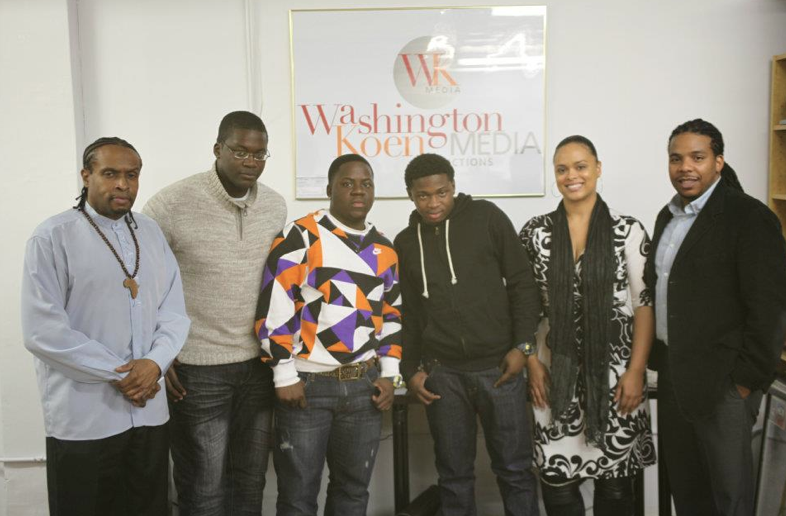
A few months ago Media Make Change partnered with the Beyond the Bricks Project to create a comprehensive media literacy program that serves young Black males. The Community Producers Program is a four-month course that invites young Black males to interrogate media images and subsequently create their own stories using digital media technology. We're elated to report that the program, now in it's second month, is thriving. Take a look at the new campaign video featuring several young men currently enrolled in the program at Teachers College, Columbia University--a sponsoring university.
We encourage you to donate to the summer fellowship program, an extension of the Community Producers Program, so the young men can continue to produce awe-inspiring work. If you are unable to donate, then please consider spreading the word to your various networks and encourage family, friends, and co-workers to contribute to this project.
On behalf of Media Make Change, I want to thank all of those involved in creating this program from the ground up, including Derek Koen, Ouida Washington, Dana Salter, Nisaa Ali, Bianca Baldridge, and Jose Vilson. I'm overjoyed and proud to have been a part of this project with all of you.
Interested in working with and/or contributing to Media Make Change? Contact us directly at mediamakechange [at] gmail [dot] com.
MMC Partners with Harlem Scholars for 1-Day Workshop!
Harlem Scholars Program at The City College of New York
+

NEW YORK CITY - Media Make Change will host a 1-day workshop this Saturday March 31st at City College with high school students from Frederick Douglass Academy. MMC is excited to collaborate with the Harlem Scholars Saturday Institute and their college readiness program. We will work with students and guide them on how to use social media and blogging tools to spread awareness about topics relating college prep. Students will produce media according to the following college readiness topics:
- Increase cost of attending college
- Minority faculty/professors on college campuses
- Retention and graduation rates of minority students
- Student services and career development
- Campus organizations
- Relationship between school and school athletics
- College ties with the community
As part of an interactive workshop, students will be invited to post teams blog here on Media Speaks! about one of college readiness topics above. MMC has hosted interactive workshops in the past. In 2009 our team went to Detroit and presented an interactive workshop on Social Media for Social Justice (you can check out the photos from Allied '09 on our Facebook page).
We encourage our online community to get involved. If you'll be on Twitter this Saturday morning from 9AM to 11AM, follow us at @mediamakechange and use the hashtag #MMCHarlemscholars for up-to-date tweets from the event. Students will also be using their smart phones and computers to live-tweet projects as they post to Media Speaks! We also encourage HBCUs that are on Twitter to be involved in the conversation. Some of these students might be headed toward an HBCU very soon, and what better way to engage them while they're researching colleges than through Twitter!
See you on Saturday!
Happy New Year!
On behalf of Media Make Change, I'd like to wish everyone a happy 2012! We're excited to begin this year with brand new projects in the pipeline.
The Beyond the Bricks Media Literacy Program will begin at the end of this month in Harlem, New York City. This past December, we held a focus group with several young 'black' men in Harlem. We were pleased by the positive feedback we received about the curriculum overall. The young men were enthusiastic about the program that offers them the space to interrogate images of 'black' males in mainstream media, and allows them the opportunity to produce their own work in response. Media Make Change and the Beyond the Bricks Project are looking forward to the amazing projects that will surely come from some of our brightest young men in the nation. Stick around, there's much more to come!
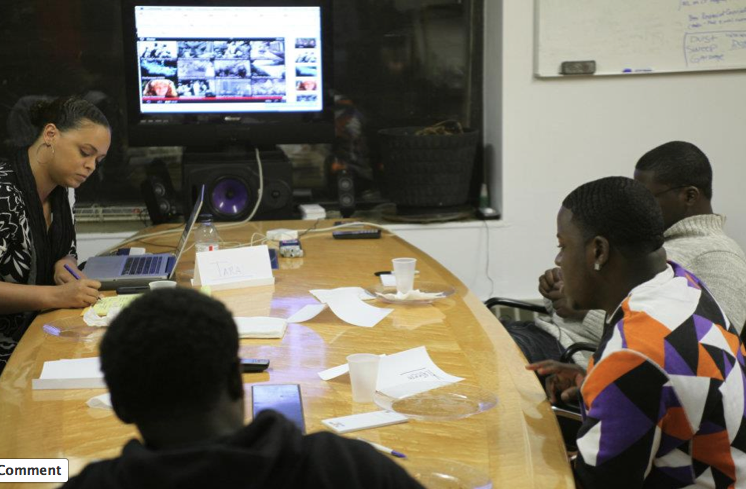
Beginning in February 2012, the Media Make Change website will have a distinct new look. Since our inception, we've made some significant organizational changes in hopes to broaden our reach into various communities. Working with the Beyond the Bricks project is just the beginning of where MMC plans to go in the new year with curriculum and professional development, as well as digital media production.
Speaking of new digital media production projects, I will be launching my first podcast in February entitled Disaster Narratives. Disaster Narrative Podcast will feature stories from disaster-affected people from around the world. My hope is that through these stories we can reflect on our own humanity. I look forward to documenting and listening to the stories of struggle and triumph from everyday people, living everyday lives. In the meantime, if you or someone you know would like to share your story about disaster in whatever context, please email mediamakechange [at] gmail [dot] com. Stay tuned!
Don't forget to like us on Facebook!
Keep Watching Vo. 2: Police Pepper Spray Protesters
Police officers pepper spray UC Davis students with countless digital recording devices capturing the event. Digital counter surveillance--namely what we see happening as protesters become citizen journalists by turning digital cameras on the system that is meant to protect them, can arguably be seen as a tactic of the #OWS movement. Time will only tell if, in fact, these are tactics of the movement that can work to transform policies in the long run. In the meantime, keep watching.

"A police officer uses pepper spray on an Occupy Portland protester at Pioneer Courthouse Square, Oregon" (via The Guardian).
Video of UC Davis students being pepper sprayed by the police.