Leaping the Gap: Addressing Independence in Underprivileged Communities
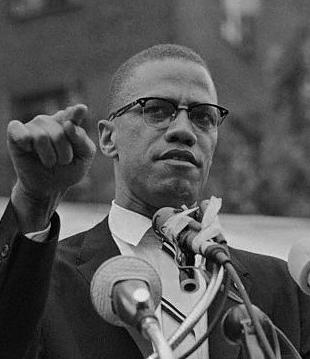 It's amazing to me that in this day and age, very few of us have addressed the issue of independent ownership on the web. With the advent of Media Make Change, and its like-minded allies, we have a venue by which to address the inequities that persist in an increasingly global and digital world. Some of the first things I thought of when it came to addressing "ownership" came from Malcolm X, community organizer. While he's most popular for his radical stances and politics, he's also well-known for his advocacy for community ownership. His idea of ownership stems from understanding that the minute a community invests in their own financial capital, the more they'll invest in their own human capital.
The same applies to the web.
While the percentage of homes with Internet access grows yearly, there's around a 20% difference between percentage of Blacks and Latinos home access and Whites and Asians, so the digital divide persists. Even amongst those of us who have Internet access, regardless of background, we still rely heavily on free services such as Blogspot and Livejournal to host our thoughts, Facebook and Ning to house our networks, and Twitter and (sadly) MySpace for promotions. While many of the reasons why we stick to the free services are purely economical, a few of us with the capita don't invest simply because we would rather outsource our personal information.
And that's where the future lies.
In my case, I relied heavily on free services to host everything I did. I was an early adapter to Facebook, Xanga, Twitter, MySpace, and every other larger scale social network service there was. Then, as my interests expanded, I began to see the limitations of these spaces. I started to see friends in similar fields get their memberships revoked or their material dissolved. Social networks began to change their terms of service to de-privatize personal usage, and some services even began to arbitrarily block certain sites that others deemed offensive, even when others of its like never got any warnings.
Thus, with the help of a few friends, I got my own .com.
Admittedly, this is not a new idea for many of us web savants. Multiplatinum musicians and businessmen advertised this idea in the early 90s. Yet, how to attain this status has escaped those who didn't have access early on. Even I had my fears about jumping into this web on my own.
Still, the cost of freedom is worth every penny. In my journey, these three points helped develop my own presence on this vast Internet:
- I have my own name and extension under which anyone can reach me.
- I have contracted independent hosting (note: the difference here is that the hosting services are beholden to you when you're paying, especially if you know what you're supposed to get)
- I use the free services as a means of networking with those who use the services.
Notice that the relationship here is different. Once you've controlled your own space on the Web, you can now interact on those sites without being beholden to them. In a way, they need you because it's your content that engages your network, particularly when you build a sizable network of your own.
Media Make Change is part of that vision. Building and teaching to a curriculum that serves the people who need this sort of information the most may do well for our prospects in decades to come. Until then, let's work towards our independence, one .com at a time.
How else can we build as a community on the Internet?
Jose Vilson, who wrote a synopsis of this back at his site ...
CCC & Evens Jean Help Build A New Haiti
The following is an account from Evens Jean, a social worker and missionary, and Pastor Tom Pokorni of the Community Christian Church (CCC). Evens Jean recently visited his homeland Haiti to provide relief support along with colleagues Pastor Eddy Gervais of CCC, Pastor Tom Pokorni, Founder of Agape Force - Miami, and Mr. Michael Nozile, Executive Director of Gang Alternative, a ministry of CCC. Jean and Pokorni shares their journey and photos with Media Make Change in hopes of raising awareness about the devastation in Haiti. With this account, they provides us with another perspective not too much highlighted within the mainstream media; one based solely on hope, love, and inspiration.

Many thanks for your prayers during my trip to Haiti! It was a long, emotionally draining week, but now I’m safely in back Miami.
We flew into Santo Domingo last Saturday and endured a bumpy, 8-hour bus ride to Port-au-Prince. What we saw there left us drained and sobered. The pictures on TV hadn’t prepared us for the squalor and poverty we encountered.
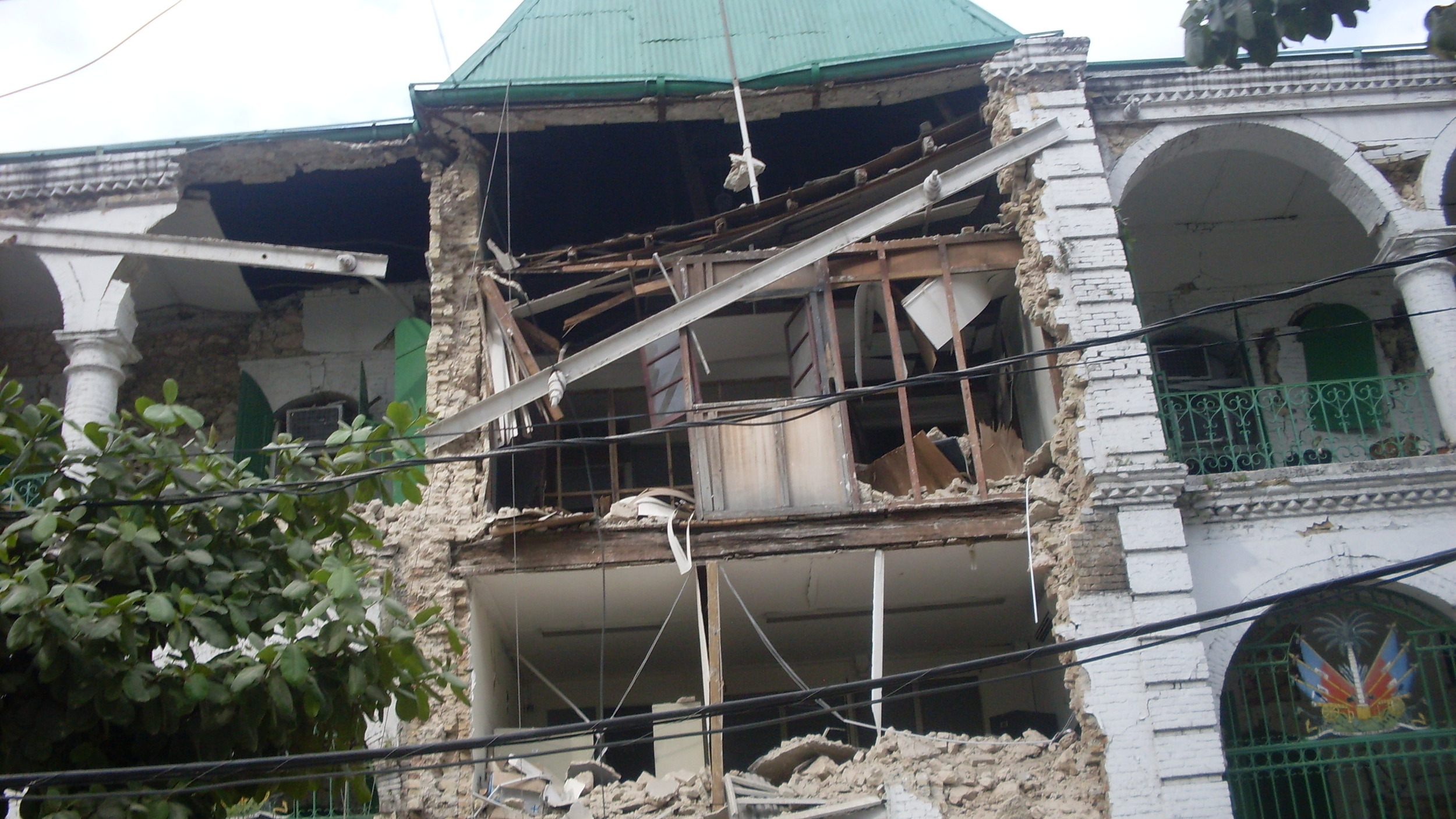
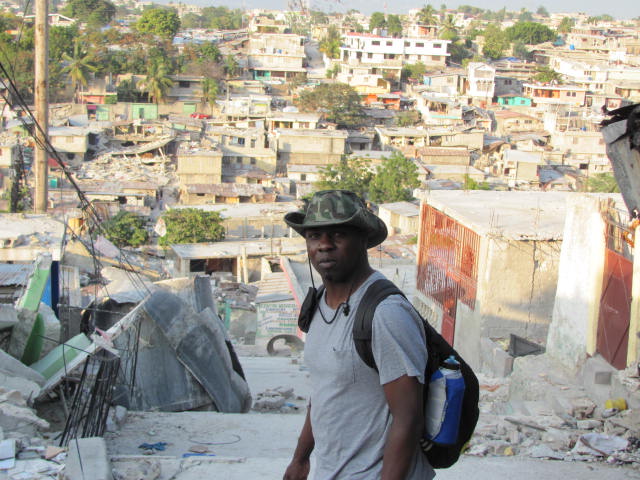
Hundreds of thousands of families have lost everything. Block after block, buildings are flattened, like the Ministry of Transportation and Communication government building. Over a million people are now living in tents, which are often little more than sheets stretched over sticks. I shutter to think of what will happen when the rainy season begins in a few months.
During the week we saw almost no food distribution by any agencies on the ground. But we were able to give more than $9,000 in cash directly to victims of the earthquake, and distribute medical supplies. I was constantly amazed at the resiliency of the Haitian people. I don’t know how they’re able to pick up the few pieces left of their lives and continue to go on, but they are. They will.
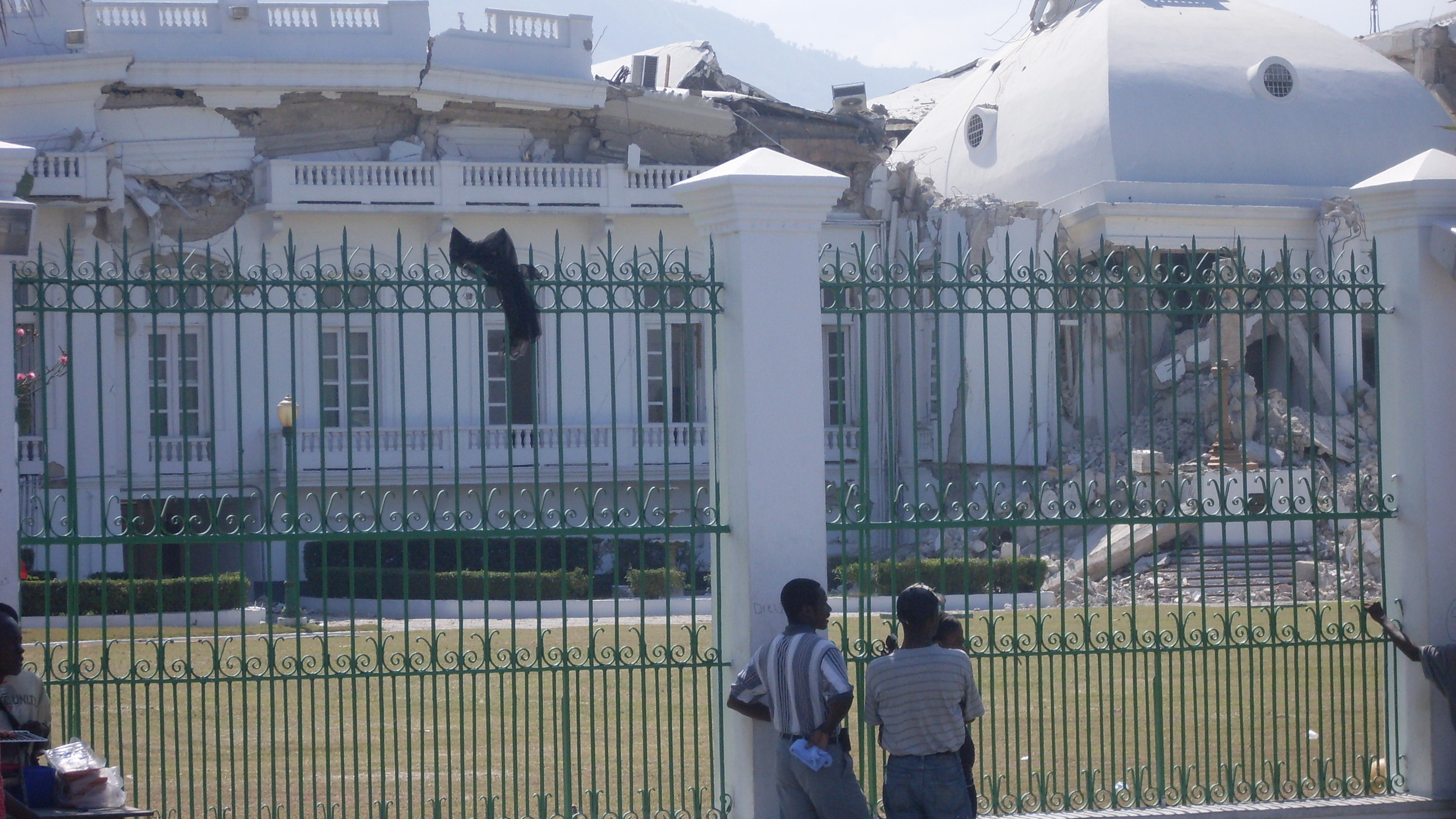
In truth, things are so bad that if I didn’t know God I would say there is no hope for Haiti. Every government building is crumbled, and millions of people have no jobs, no hope for jobs, no visible assistance, no working government, and no food – nothing.



But I have faith in God, and it is because of this faith that makes me want to do more for Haiti. I am praying for God’s direction so that I can be as effective as possible in helping rebuild Haiti. I think that with my background in social work, education, and missions, I am uniquely qualified to help shape a new Haiti in some small way. I pray that God will open the right door(s), and covet the prayers from others around the world.
As Haiti slips out of the news headlines, I humbly ask that you keep our brothers and sisters in your thoughts and prayers. We've got a long way to go to rebuild lives and restore land, but I believe when all is said and done, the world will know a new and better Haiti.
If you would like more information about donating to Haiti, please visit www.cccmiami.org and click on the link "Donation For Haiti." Thank you very much for your assistance. May God continue to bless you and Media Make Change.
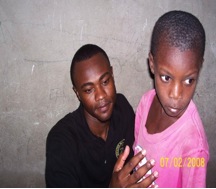
Evens Jean was born and raised in Les Cayes, Haiti, which is situated southwest of the capital city, Port-au-Prince. In 1996, at the age of thirteen, he moved to Miami with his family. After college, Jean worked as a Case Worker for two years mostly serving a large community of Haitians in Miami. He now works as a Youth Development Specialist & Life Coach for HANDY (Helping Abused Neglected Disadvantaged Youth) of Broward County. Jean is a member of the Community Christian Church and regularly travels with the church to Haiti, where he and others provide support and relief for children and families in surrounding areas.
Evens Jean holds a Bachelor of Science in Psychology from Florida State University.
If you or someone else would like to share your story, or find out more ways to get involved with relief efforts, please visit Project Haiti Speaks.
The Social Conscience of Snew Media in Haiti
 A week has passed since Haiti suffered from a 7.0-magnitude earthquake. The earthquake wasn't the only tragedy afflicting Haiti at that time; the country was suffering from poverty and political corruption long before the earthquake hit. Like Katrina, the earthquake shed light on systemic forces of oppression that made Haiti such a prime target for disaster.
My friend J. said it well in a recent email:
It is with grave horror that I take in the daily news of the horrific conditions in Haiti. To believe, as perhaps I once wanted to, that what happened last Tuesday and since is "a natural disaster" only, would mean I am willfully choosing to not know a lot about the history of Haiti...The issue is not whether funds will roll in this week and next. The issue is what will be done to make Haiti a self-sustaining nation again...
Food, water, clothing, and shelter are critical at this point in time, but J's right—Haiti needs more than band-aids. This inspired me ask some important questions about how bloggers, social media aficionados, and digital media activists can best address problems in Haiti. How can digital media be responsibly used to address social, political, and economic crises? Moreover, how can it be used to push for both short-term relief AND long-term change?
As Tara and I set to work developing Project Haiti Speaks—a campaign to bring cameras and other digital media devices to Haitian citizens and volunteer workers—I began thinking deeply about the moral implications of publicly documenting the tragedy in Haiti. More emails followed, including one from Nathan, an activist and photographer who spent time in Haiti before the earthquake.
One of my personal struggles in doing photography in Haiti is that while my work goes on to inform others of my perspective in Haiti, it does nothing to feed people, heal people, or change a system that I see as nearly cemented in place by 200 years of US and European economic policy. I wonder how to make effective and lasting impacts when there is a system of immense power and a running head start continuing to push back. This...is an internal battle that I believe anyone with a strong conscience and sense of self reflection should go through in their work.
Nathan brought up a very good point. While it's great that so many Americans want to help, it's also important to think about what Haiti actually needs, and whether or not our efforts are actually benefiting the people of Haiti. American relief efforts should be driven by an understanding of what resources would provide the greatest benefit, rather than driven by an ego-based desire to be the hero that swoops in and saves the day. As Nathan pointed out, we're not just fighting a natural disaster—we're fighting an entire system of poverty and political corruption in sore need of reform.
I don't know exactly what it will take. My instinct tells me that we need to learn more about these issues from the source. Too often, we hear stories that are told about the survivors, where a narrator with a minimal connection to the tragedy attempts to explain lives that s/he doesn't truly understand. But Haitian citizens have the right to tell their own stories; they have the right to engage in public discussion about how to remedy the crisis in Haiti. Additionally, the only way that we here in the States can really know what's going on is to hear about the lives, the triumphs and the tragedies, from the Haitian people themselves.
This is why Project Haiti Speaks could be so valuable. Too many Haitian citizens and volunteer workers currently lack access to digital communication tools and resources, therefore, their stories are being told for them by major media companies. Providing cameras and online access to survivors will enable them to continue posting public content about current events in Haiti, long after traditional mass media has abandoned Haiti for the next juicy piece of celebrity gossip. Cit-journalists could provide the inside scoop about which relief organizations are doing the best work, and they could clarify confusion surrounding recent accusations of relief effort scams funneling millions to unworthy pocketbooks. Survivors need to know that their voices are important, and that people around the world are listening.
I also see that there's a need to be extremely sensitive and thoughtful in the approach of Project Haiti Speaks. Of course, we don't want filming and photography to serve as a distraction from other relief efforts. Making sure that people have food, water, and shelter is so much more important. Also, we want to be conscious of citizens' privacy. Some may not want their private crises to be publicly displayed at this point in time, and we want to be very sensitive of those needs and boundaries. But for those who have something to say, we need to ensure that they have an opportunity to be heard.
Introducing The Board!
Media Make Change is proud to announce its newest Board of Directors! Not sure how we did it, but we successfully managed to bring together some of the brightest and most innovative minds of snew media and non-profit management. So, without further ado . . .

First up is Joseph Perez, an IT Specialist and one of the first to join our board. Joe played a major role in developing the MMC website, along with our Executive Director, Trina Chiasson. I'm continually amazed by his talent and dedication to MMC. I encourage everyone to read about Joe's impressive background in the IT Industry and with Open Source technology in the Board section of our website.

Next, is Nathan Havey, a new media and political campaign strategist who has worked on major campaigns in Denver, LA, D.C., and Boston. Nathan and I met at Brave New Films, where we single-handedly ruled the world of Communications, at the Associate level! Aside from being incredibly smart with a unique ability to problem solve using his imagination and creative genius, he's also a person with a tremendous amount of integrity, and he is a wonderful friend. Oh, plus he takes a really awesome picture behind a Macbook Pro.

Aisha Mohamedi Richard is an attorney in New York City who used to teach law and advocacy to teens in Baltimore City. She's a wonderfully gifted woman dedicated to her work and serving the communities around her. I met and connected with Aisha on Twitter this year, and I've kept up with her night court tweets about the criminal justice system, flirty male lawyers, and grumpy judges. She's incredibly insightful about issues concerning women/human rights and issues relating to communities of color.

Myra Donnelley is currently the Director of Development for Brave New Films. Myra's knowledge about non-profit management, fundraising, grant writing, etc., is second-to-none. When I thought about starting a media justice non-profit, Myra was the first person I consulted. Even while working with Myra at Brave New Films, I was always in awe of her dedication to community development, education, and media advocacy. She is a walking, talking resource library of foundation and non-profit information. Myra is a wonderful woman and friend who thankfully kept in touch with me on Facebook after I moved away from Los Angeles.

Finally, Jose Vilson is an educator in the New York City public school system, he's also a poet, writer, and popular blogger. His work with youth is no less than admirable. He is dedicated and passionate about education and using the written word to empower communities. He's also a techy like many of us here. His knowledge about social and new media technology/methods will be invaluable as we continue to develop MMC. Jose and I met a few years back on one of the social networking sites - I think Facebook? I quickly learned that even in social networks, it's a very small world. I found out that Jose (a native New Yorkah) is friend's with a childhood friend of mine (from Ohio), of whom he met by way of a popular African-American blogging site! Did you get that?
Check out Jose's website and blog at http://thejosevilson.com.
There you have it! If you want to know more about these wonderful folks (and we just know you do!), please check out Media Make Change's About/Board page.